
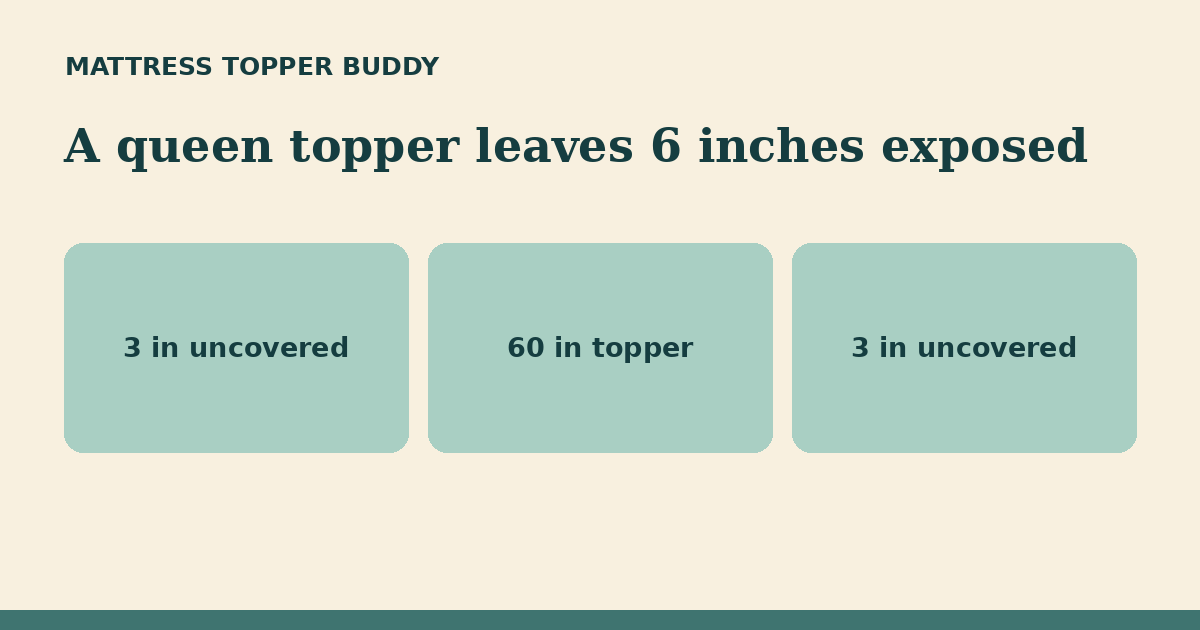
A typical Olympic queen mattress takes a 66-by-80-inch mattress topper. A standard US queen topper is typically 60 by 80 inches. If your mattress and topper match those dimensions, a queen topper centered on the Olympic queen leaves a three-inch strip uncovered along each side. Measure your mattress and compare the finished topper dimensions before ordering. The Olympic queen name describes a specialty size, so check the product selector and the size chart for the exact item.
Check the width, length and depth separately
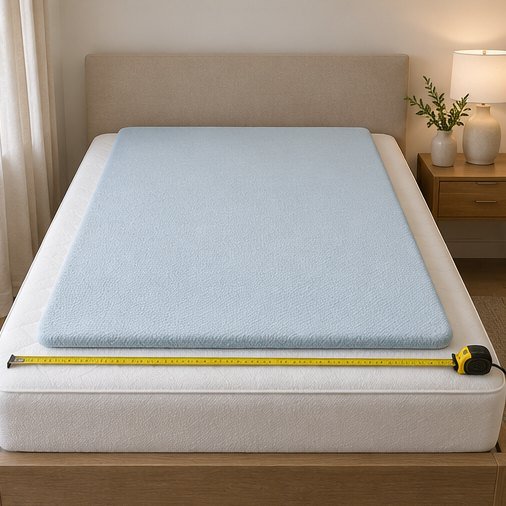
Strip off the sheets and any other loose layers. Measure straight across the mattress at more than one point, letting any soft upholstery keep its normal shape. Measure length from head to foot with the tape held straight. A measurement taken diagonally around a rounded corner reads differently from the usable side-to-side width. If the bed frame has rails above the mattress, note the space between the rails too.
Write down the depth separately from the footprint. Length and width describe how much surface the topper can cover. Depth tells you how high the made-up bed will sit and which fitted sheet pocket may wrap it. If your mattress measures close to 66 by 80 inches, compare it with the seller’s actual numbers. Brooklyn Bedding’s Olympic queen size listing uses a nominal 66-by-80-inch footprint. The specific product and any stated manufacturing tolerance still matter.
Compare the common size options
| Topper size | Nominal dimensions | Effect when centered |
|---|---|---|
| Olympic queen | 66 × 80 in | Matches the nominal footprint |
| Standard queen | 60 × 80 in | Leaves 3 in exposed at each long edge |
| Standard king | 76 × 80 in | Overhangs by 5 in on each long edge |
| California king | 72 × 84 in | Overhangs along both width and length |
These are examples for common US dimensions. The Sleep On Latex topper size chart illustrates those nominal standard queen, king and California king options. It is a useful reminder that switching to the next label in a store menu can change two dimensions at once. Check the listing for the model you actually plan to purchase, especially when shopping across markets or searching for vintage bedding.
Work the numbers before you decide to reuse a queen topper
Subtract the topper width from the mattress width. With a 66-inch mattress and a 60-inch topper, the difference is six inches. Divide by two only if you plan to center it. Centered means three inches exposed on both sides. Line the topper up with one edge and you put the full six-inch uncovered strip on the other side. Each arrangement changes where sleepers encounter the transition from the raised topper to the bare mattress.
If you already own the smaller topper, observe whether its edges land where people sleep or sit. Make the bed with the protector and sheet you normally use, keeping to their fit instructions. Notice whether the sheet pulls the exposed portion down into a visible step or drags the foam sideways. A technically centered layer can still be inconvenient if the edge lands under a shoulder or if the straps cannot reach the mattress corners. Our guide to a full topper on a queen bed shows the same measurement principle with a different size pair.
Choose between a specialty size and a custom order
For edge-to-edge coverage, ask for a topper sized to the measurements you wrote down. Confirm whether the seller makes a finished Olympic queen, cuts a foam slab to order or offers a separate cover that goes with it. Some listings show a size as an option but only offer certain thicknesses or firmness choices in that footprint. Check all selections together before placing the order. Ask where the seller measures thickness for an insert with peaks or quilted fill.
When ordering a custom topper, send the measured length and width, an estimate of the mattress corner shape, and any rail clearance that matters. Ask for the expected tolerance and whether the finished measurements include the cover. If your bed has visibly rounded corners, ask whether you should submit a drawing or template. Confirm the directions separately for the topper and its washable cover. A standard-size zipper sleeve may no longer fit a custom insert even if the foam fits the mattress exactly.
Review return and remake terms before paying, particularly for a product made to order. Find out who checks a disputed measurement and what photos the seller would request. Keep the order confirmation with the approved dimensions. When the package arrives, compare the label with that confirmation before opening it. Give a compressed topper the maker’s stated expansion interval before checking the final dimensions.
Consider the whole bedding stack
Suppose the Olympic queen mattress is 12 inches deep and the topper adds another two inches. The combined depth is about 14 inches before any padded protector. Use the measured total and a sheet that matches the 66-by-80-inch footprint. A deep-pocket standard queen sheet may accommodate the height while still being too narrow. Conversely, an Olympic queen sheet with a shallow pocket may slip because its width is right but its corner construction cannot reach underneath the full stack.
After making the bed, check the last corner you pulled down and the one opposite it. The elastic should sit where the sheet maker intends. If the elastic rides halfway up a side or folds the topper at a corner, take the sheet off and measure the finished depth again. Look for a protector that also supports the full footprint and height. Our mattress topper thickness guide explains how the additional depth changes sheet fit and the height of the bed.
Evaluate an oversized topper before doing any alteration
A standard king topper may look like a convenient source of material because it shares the nominal 80-inch length. At a nominal 76 inches wide, it is ten inches wider than the target. An unsupported overhang will remain if you install it unchanged. Do not plan to tuck the surplus into a tight cover or let it droop over the rails. Check whether the maker explicitly allows alteration of the exact product, including its cover or any permanent liner, before choosing that route.
If you want the feel of a model unavailable in Olympic queen, ask the seller about a size made to order or find a similar material in your needed dimensions. A quilted topper with edge stitching, straps or a waterproof layer is a different construction from a compatible bare slab. Alteration can also affect whether the seller will accept a return. Compare the total cost of a correctly sized topper and cover against the cost of buying a larger layer that may no longer be returnable.
Make a fit record you can use at delivery
Keep the seller’s size chart, your mattress readings and the order confirmation together. If one long edge of your mattress reads 65¾ inches and the other reads 66 inches, note where you took both measurements. The numbers help the seller distinguish a difference in measuring technique from a real mismatch. Include the available width between rigid rails if the mattress sits in a recessed frame. That dimension matters even when the mattress cover can be compressed with your hand.
After the topper has recovered, center it without the sheet and compare the left and right edges. Then repeat with your usual bedding. If only one edge shows a gap, reposition the topper before judging whether it is undersized. If all the measurements disagree with the confirmed listing, photograph the entire topper and the tape readings in the position the seller requests. Keep the shipping label and model tag visible in separate photos for reference. Avoid alterations until the seller has reviewed any mismatch.
Frequently asked questions
Is an Olympic queen the same as a short queen?
No. The Olympic queen example here is wider than standard queen and keeps the nominal 80-inch length. A short queen typically changes the length instead. Specialty-size names can vary. Compare both measurements for the mattress and topper, even if two products both contain the word queen.
Can I buy two narrow toppers to make the width?
Only if their actual widths add up to the required footprint and their lengths, thicknesses and intended uses match the setup. Try both pieces together and decide whether the center join is suitable. A fitted sheet that wraps both pieces can hold the stack, but it does not turn the two surfaces into one continuous insert.
Should I measure the topper through its shipping wrap?
Use the packaging label to check you received the right SKU. For a final measurement, wait until the topper has been opened and recovered according to its instructions. Lay it flat and measure without stretching the cover or pressing down on the edges.
Conclusion
Start with a nominal 66-by-80-inch topper and confirm the mattress’s actual footprint. A standard queen leaves a narrower surface, while a king adds unsupported width. Measure the finished bed depth as a separate step so the topper, protector and fitted sheet work together.