
You can stack two mattress toppers if both sit flat, match the mattress footprint, and stay in place under a fitted sheet that reaches beneath all four corners. It makes the most sense as a trial when you already own both layers. Start with one topper and add the second only if you can name the problem it solves. If the bed already dips or the mattress foundation has shifted, check that first.
When stacking two toppers makes sense
The simplest example is a bed where a single topper gives you the surface feel you want, but you also own a second topper that feels distinctly different. You can try the two together and compare them with each layer used alone. An extra layer may give you more room to sink before reaching the mattress underneath. It can also change how easy it feels to turn, sit at the edge, or slide across the surface. Those effects depend on the materials, how thick each layer is, and the mattress underneath them.
Some combinations are easier to evaluate than others. Two flat toppers that cover the full mattress are a more useful starting point than a short layer, a loose fill insert, or a topper whose sewn sides prevent it from sitting flat. If one layer has a fitted skirt or fixed corner straps, follow its installation instructions and make sure it can sit properly in the position you want. A topper may be intended to grip the mattress directly. Check the manual before placing it on another layer.
As one example of a product designed around choices in thickness, firmness, and covers, see Sleep On Latex’s natural latex topper specifications. The specifications are useful for comparing the actual layers available for that product. For any topper you already own, use its own label and instructions before deciding whether to stack it.
Which mattress topper should go on top?
Start with the flatter or firmer layer below and put the layer whose surface feel you prefer on top. For example, you might start with a firm latex topper beneath a softer foam layer. You’ll feel the softer layer first, while both layers contribute to how far you sink. If you put a firmer layer over a softer one, the bed may feel firmer when you first sit down but feel less predictable as the lower layer compresses. Try both orders only when both products can be used that way and each arrangement stays flat.
Check which side faces up before you change the order. A grippy underside, textured sleeping surface, or sewn cover can indicate a specific orientation. Keep the layers aligned as you test them. If the mattress has rounded corners, line up the long edges first and check how much of each corner is supported. If a topper overhangs, folds, or leaves a noticeable step halfway across the sleeping area, switch to layers that match the bed.
One starting arrangement for a fit test
14 inches before adding a protector or other layer.
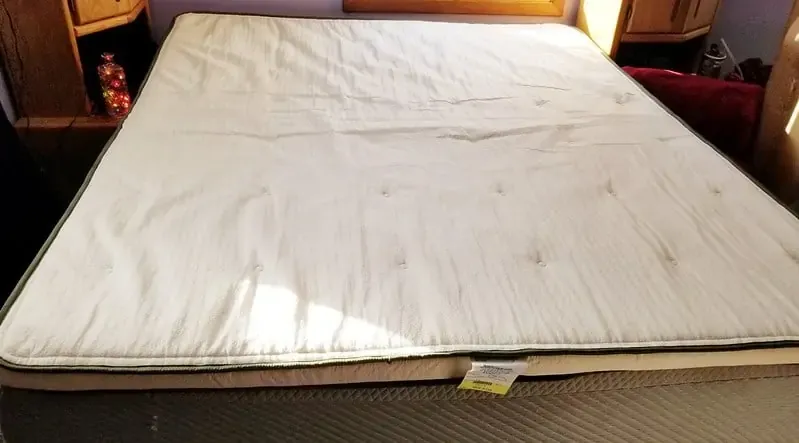
How to test two toppers without changing everything at once
- Start with the mattress and your preferred topper. Lie in your normal position and notice whether the surface is comfortable and whether it’s easy to turn. Check the mattress for a dip with the topper removed if the bed feels uneven in one area.
- Add the other topper and align all the sides. Look across the top at eye level if you can. An edge that sticks up or a folded corner can feel more noticeable when it sits underneath another layer.
- Measure the combined height. Measure from the top of the stack to the bottom of the mattress. Check the fitted sheet’s depth range and tuck in each corner. If the existing sheet can’t reach underneath, use a fitting sheet for the trial.
- Test how you move on the bed. Sit where you usually put on socks, lie in your normal sleeping position, and roll over a few times. Check whether the top layer slips or whether the bed feels harder to get out of.
- Inspect it in the morning. Note whether any layer migrated, whether the sheet corners stayed put, and whether the extra cushioning felt useful. If you want to compare the opposite order, change only the order for the next test so you can tell what made the difference.
If the two-layer setup feels worse, return to the single topper you preferred. For a less expensive comparison, use the same sheets, pillow, and sleep position as much as possible. Changing the bedding and the topper at the same time makes it difficult to tell which change affected the feel.
Common fit problems and what to check
The fitted sheet keeps coming loose
Check actual height before blaming the elastic. For example, a 12-inch mattress with 2- and 3-inch toppers adds up to 17 inches before any padded protector. A sheet rated only up to 16 inches is outside its stated range in that setup. Use the bed’s existing length and width to choose the size, and use total depth to choose the pocket. If the depth is already within range and the elastic still slides off a corner, check whether the sheet is oriented correctly and whether the elastic has worn out.
One layer slides sideways
Mark where the corners start by noting their position against the mattress seams. After getting in and out of bed, inspect which layer moved. If the bottom moves on the mattress, check the bottom surface and the topper’s installation instructions. If only the top one moves, look at the contact between the two covers. If either arrangement keeps drifting after you align it and use bedding that fits, a single topper removes the extra surface where the layers can slip against each other.
The bed feels too high or too soft
Check the height when you sit at the edge as well as when you lie down. An extra layer can make the bed feel worthwhile when you first lie on it but awkward to enter or exit. If you feel as though you have to climb out of a depression to turn, compare the setup with the top layer removed. Our topper thickness guide can help you choose a single layer closer to the height you want.
When one topper is the better choice
If you’re buying both layers from scratch, start with one. Decide what you want from it first. A shopper who needs a slightly softer surface may get the desired change from a thin topper, while someone trying to change a pronounced dip should inspect the mattress and its base. Test the new topper on the bed you intend to keep before buying a second.
A topper can change the feel of a surface, but a dip in the mattress usually follows through into the layers above it. Remove both toppers and look at the mattress by itself. Follow the mattress maker’s instructions for checking the foundation and reviewing coverage if you suspect a defect. If your existing mattress feels even and the top layer is the main problem, check whether you’re using a topper, pad, or protector, since each adds a different amount of cushioning. See our topper, pad, and protector comparison for help identifying the layer.
Compare two thin toppers with one thicker topper
Two toppers that add up to three inches can feel different from one three-inch topper. The two layers may use different materials or have separate covers, and those covers can change how the upper and lower surfaces move against each other. If you already own a thicker topper, compare all three setups: the thick topper, the thinner layer you prefer on its own, and the two thin layers together. Record which arrangement stays in place and which gives you enough cushioning. The combined height helps you choose sheets, while a side-by-side trial helps you judge the feel.
Frequently asked questions
Can two toppers share one removable cover?
Only if the cover is intended to fit layers of that combined size and thickness. Check how much room is inside the cover and whether either topper needs its own cover for normal use. If you have to squeeze the corners together to close the zipper, choose a cover designed for the finished stack.
Can I stack toppers on an adjustable base?
Check the base and topper makers’ instructions before trying it. If both allow the arrangement, see how the layers behave as the base moves through the positions you actually use. Take off the second layer if it bunches at the bend or the sheet keeps lifting at the corners.
Conclusion
If you already own two compatible toppers, compare the stack with your preferred topper on its own. Keep the extra layer only if it improves the feel, stays aligned, and still lets the fitted sheet tuck securely underneath the mattress.