
A full mattress topper is usually too small to cover a queen bed. A standard U.S. full topper is about 54 × 75 inches and a queen mattress is about 60 × 80 inches. Center the topper side to side and line it up at the head, and you’ll leave about 3 inches of bare mattress on each side and 5 inches at the foot. That can work for a short trial if you already own the topper and the edges stay clear of where you sleep. For full coverage, choose a queen topper.
Full vs. queen topper dimensions
The U.S. size names refer to the width and length of the sleeping surface. The dimensions below are nominal. Measure your mattress and use the brand’s size chart for the exact topper you’re buying. Sleep Foundation’s mattress size guide lists standard full and queen dimensions, and the Sleep On Latex sizing FAQ gives those same nominal sizes for its toppers and explains its manufacturing tolerance.
| Size | Width | Length |
|---|---|---|
| Full (double) | 54 in | 75 in |
| Queen | 60 in | 80 in |
| Difference | 6 in | 5 in |
The width difference can affect where you turn or sit, while the length difference determines where the step lands near your feet or pillow. The gap is a strip of exposed mattress, so the issue is a change in height and feel. A fitted sheet can cover that strip, but it cannot make it level with the foam.
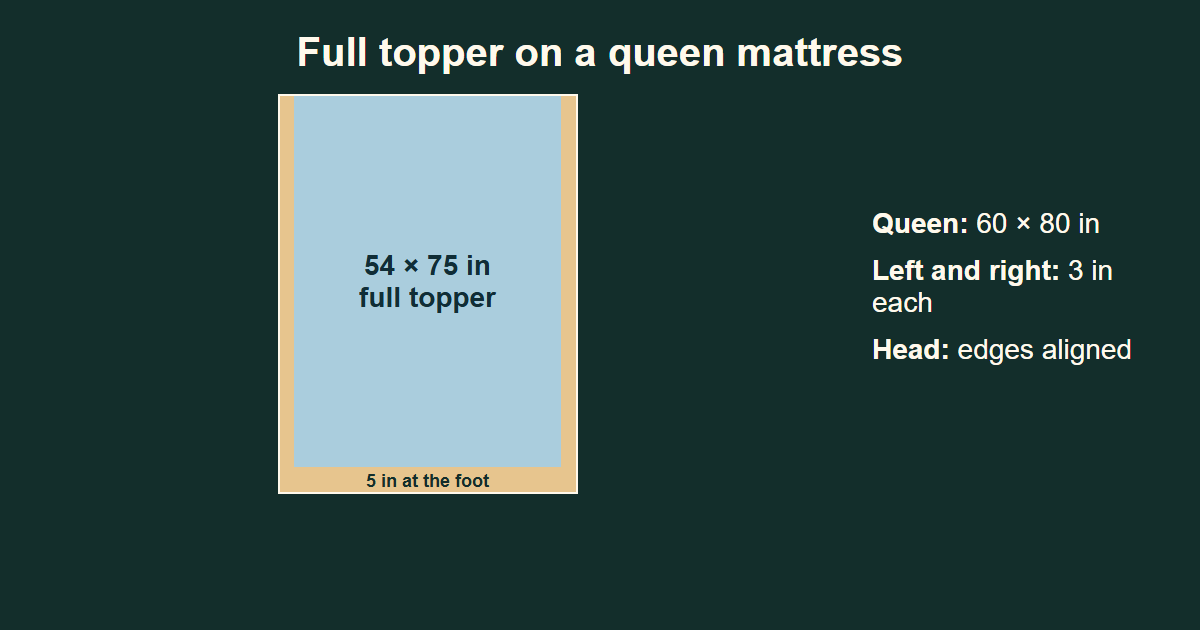
Where should you place a full topper on a queen bed?
Start by centering it across the width and aligning the head edges. That makes the change in height easier to locate and keeps it away from most of the pillow area. If your heels rest on the step, measure how far your feet are from the end before shifting the topper. Centering it lengthwise divides the extra five inches into strips of about 2½ inches at the head and foot. This may move the step away from your heels, but it also creates an edge near your pillow.
You can shift the topper sideways for a single sleeper if that moves the edge out of their usual path. Aligning it with one long side leaves the entire six-inch strip on the other side. Check where you sit and get out of bed before leaving it in that position. For two sleepers, check both sides together. A placement that works for one person may leave the other closer to a seam.
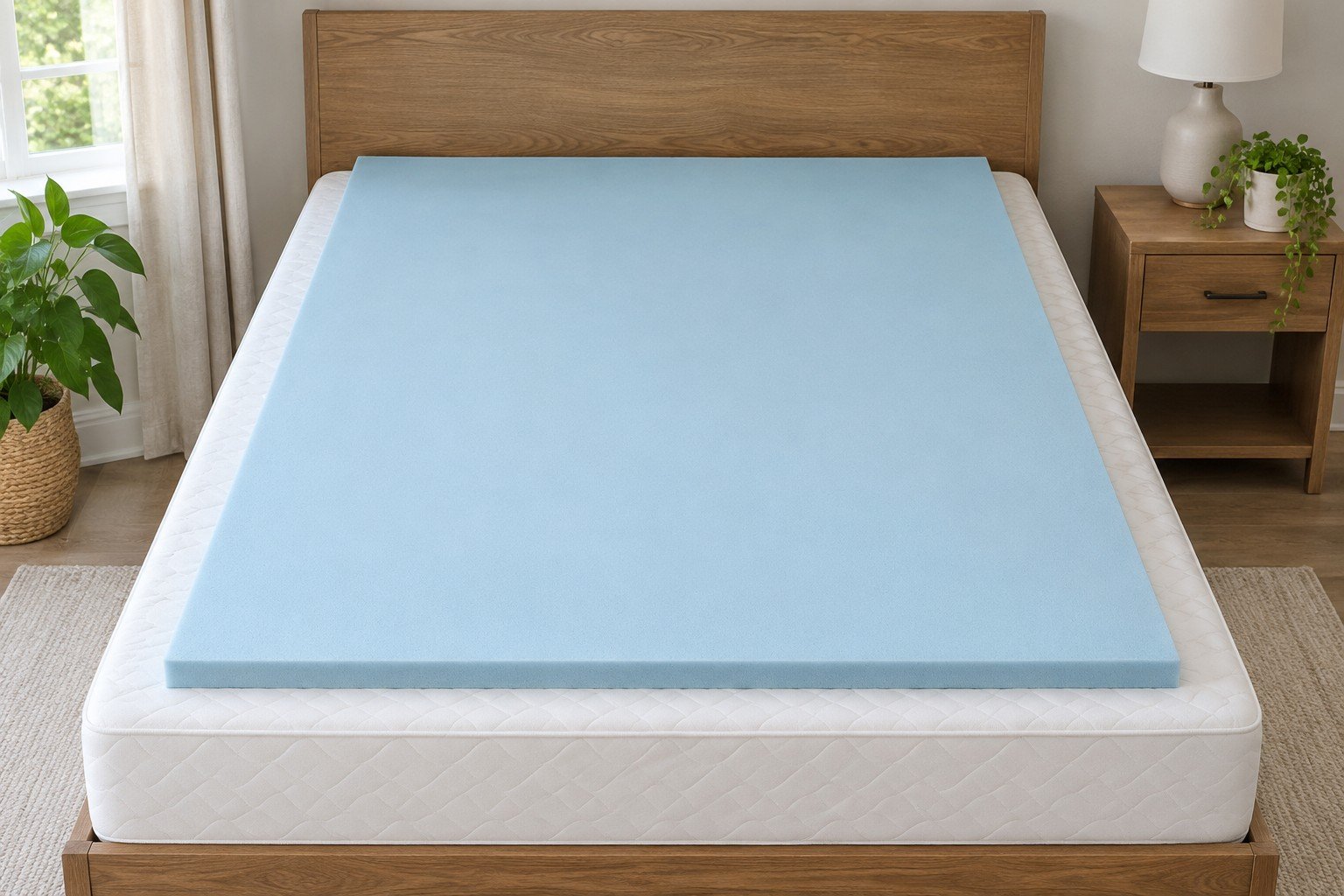
Measure your actual bed before trying the setup
- Take the bedding off. Measure the usable top of the mattress from side to side and from head to foot. Leave the frame out of both readings.
- Lay the topper flat. If it arrived compressed, follow the manufacturer’s instructions and measure after expansion. Take the width and length without stretching the foam or cover.
- Subtract the two widths and then the two lengths. Divide each difference by two if you want the gaps to be equal on both sides of that dimension. Keep the whole difference at one end if you align the opposite edges.
- Measure the height where both layers overlap. Add any protector or cover the fitted sheet needs to go over. Then compare the total with the sheet maker’s fit range.
For example, suppose your mattress measures 59½ by 79½ inches and the topper measures 53½ by 74 inches. The width difference is 6 inches, so a centered topper leaves 3 inches per side. The length difference is 5½ inches. With the head edges aligned, all 5½ inches remain at the foot. If you instead center it lengthwise, you get 2¾ inches at each end. Write both layouts down and compare them with where you actually lie and turn.
Do you need a full or queen fitted sheet?
Use a queen fitted sheet because it wraps around the queen mattress. Measure for depth over the thickest part of the stack. A mattress that measures 11 inches deep with a 3-inch topper needs a sheet rated to fit a depth of about 14 inches before any extra protector is added. Check the stated depth range on the exact sheet. The phrase “deep pocket” alone won’t tell you how far the elastic will reach.
Once it’s on, look at all four corners. The sheet should reach under the mattress without pulling the topper sideways or tenting over its edge. If one corner releases when you smooth another, first check which way the sheet is turned. If it still slips off, check its depth and elastic rather than trying to pull it tighter. Our topper thickness guide explains how an extra layer changes the overall bed height.
Try the setup before you decide to keep it
First make the bed with the topper in its chosen position. Sit where you normally get in and out. Lie on both your side and back if you use both positions. Turn toward the edges and check whether your shoulder or hip crosses the abrupt change in height. If two people share the bed, try it with both sleepers in place and compare where the topper edge lands for each person. Then make the bed again and check whether anything moved during the trial.
Review it the following morning if the first trial felt comfortable. If the topper shifted, compare its new location with the mattress seam before adjusting it. A sheet that still fits with the topper removed may have been under too much tension when stretched over both layers. If the sheet stays put but the topper moves underneath, check its underside and use the manufacturer’s setup directions. Fixed straps may be meant for the corners of a mattress of the same size.
Consider whether you can fix the layout without creating an issue elsewhere. Moving the topper toward your feet can put the seam under your pillow. Moving it to one side creates a wider uncovered strip on the other. If neither placement works in the parts of the bed you use, choose a topper that covers the mattress from edge to edge. If the problem is the bed itself, our comparison of toppers, pads, and protectors can help you identify which layer you actually need.
Know when to buy a matching topper
If you’re buying a topper specifically for a queen bed, start with queen and check its finished measurements before ordering. A matching footprint matters most when two people use the available width or when you often sit or sleep near the edge. It also makes it easier to fit a topper with a skirt or fixed straps. If you already own a full topper and want to use it for a guest, test the setup before promising that the bed will feel even across the surface.
Keep the return policy handy if you’re shopping for an exchange. Confirm whether an opened topper is eligible and whether the maker allows a size tolerance. If your mattress is an unusual width or length, ask the supplier for dimensions in writing. Matching size labels are helpful, but comparing the actual measurements is how you catch fit problems before ordering.
Compare the cost of keeping it with exchanging it
If you already own the full topper, try your existing queen sheet before spending anything. If the sheet fits but the topper edge still bothers you, buying deeper sheets won’t address the uneven surface. If the arrangement feels comfortable and the sheet is the only issue, compare the cost of one properly fitted sheet with the cost of exchanging the topper. Check any return shipping fees and confirm whether you need to keep the packaging. If the full topper has a second use on another bed, measure that mattress too before deciding whether to keep it.
Frequently asked questions
Is full the same size as double?
In standard U.S. bedding labels, full and double generally refer to the same 54-by-75-inch size. Check the listing when ordering internationally or buying for an older or nonstandard bed.
Can a thicker full topper fill the missing inches?
Thickness changes the height of the foam. It leaves the width and length unchanged. A thicker topper can make the step down to the exposed mattress more noticeable if you cross it when you turn.
Can I put a queen topper on a full mattress instead?
It will usually overhang by 6 inches across the width and 5 inches in length. Centering divides the overhang between opposite edges, but the extra foam still lacks support beneath it. Choose a full topper for a full mattress.
Conclusion
A full topper can be a temporary option on a queen bed if the exposed edges stay out of the way and the bedding fits securely. For a setup you’ll use regularly, measure the mattress and choose a queen topper that matches the whole sleeping surface.