
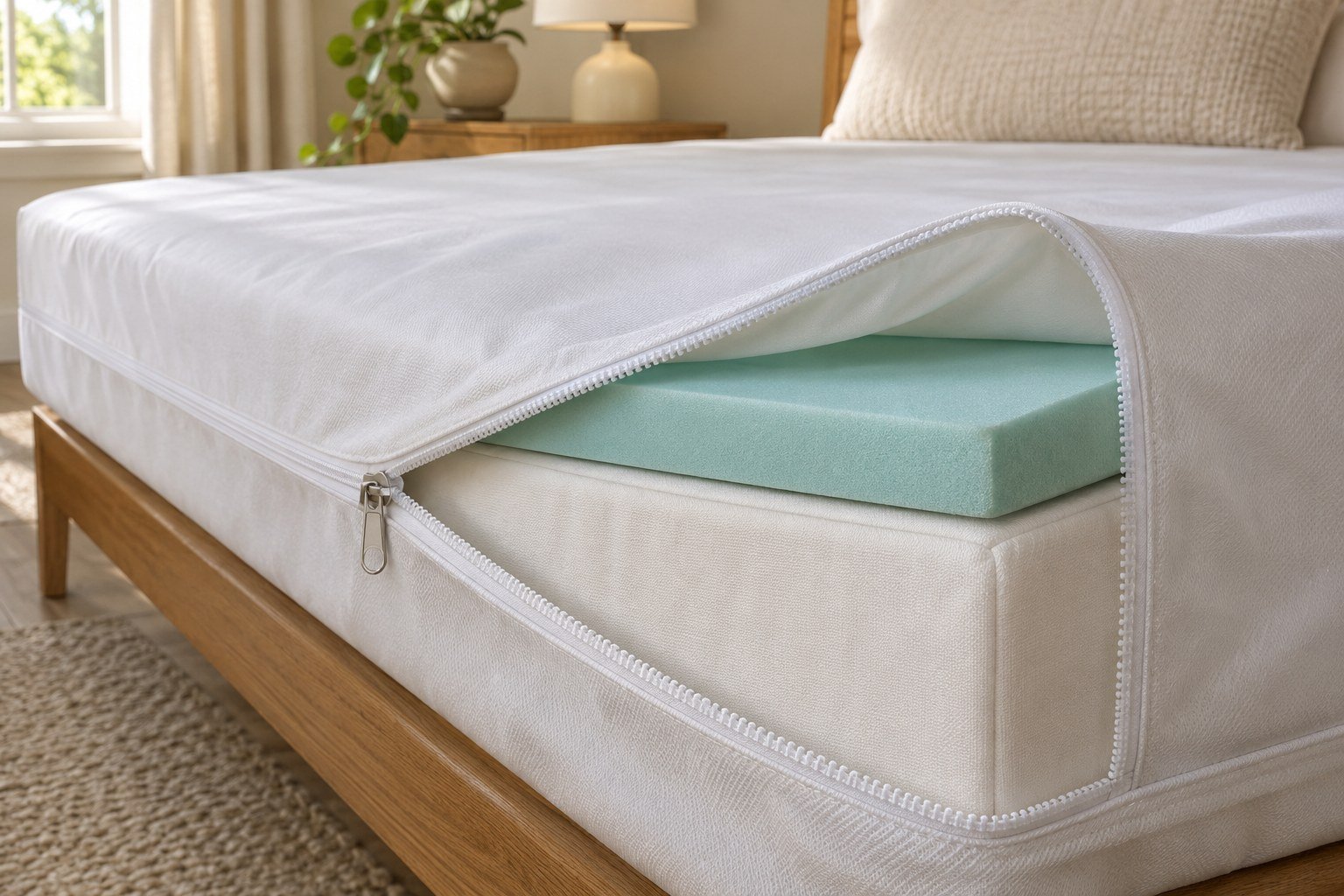
A mattress topper can go inside a zippered encasement when the encasement manufacturer allows it, the mattress and topper have compatible footprints, and the complete stack fits within the cover’s stated depth range. If any of those conditions are unclear, encase the mattress as directed and place the topper above it. You can then protect the topper separately with a compatible cover or fitted protector.
Decide what you want the zipper to enclose
A six-sided encasement closes around the top, bottom and sides of the item inside it. A fitted protector usually goes over the top and around the sides and is held by elastic. A separate topper sleeve wraps the topper itself. All three can appear under a listing for a mattress cover, so look at the installation illustration and the position of the zipper before ordering.
Think about which layer you need access to. If the topper comes off every time a guest leaves, placing it inside the mattress encasement means reopening a larger item every time. If the topper is a permanent part of the setup and the manufacturer approves the combined fit, one zippered enclosure may be a practical arrangement. The product instructions matter especially when you rely on a specific barrier claim. Confirm that the claim and installation instructions apply to the arrangement you intend to use.
Check the footprint before adding up the depth
Lay the topper on the mattress in the position you would use it. Check that neither layer projects beyond the other in a way that draws the cover out of shape. Measure length and width along straight lines. A topper that is intentionally narrower can leave a step that a tightly fitted encasement pulls across. A topper that overhangs the mattress may fold down when you bring the cover around the corner. Ask the brand whether the product can accommodate that shape before counting the open space as useful fit.
For a size mismatch, decide where the resulting edge falls. A three-inch uncovered strip down either side is a different shape from a small difference around a rounded corner. A mattress encasement sized for the mattress may still close, but that does not tell you how the raised edge will feel through the cover and sheet. Our guide to using a full topper on a queen bed shows how to measure and interpret uncovered edges.
Measure the stack without pressing it down
Remove the sheet and any loose layer that will sit outside the zipper. Leave factory upholstery and permanent liners in place. Install the topper in the intended orientation and let a recently unpacked product recover according to its directions. Hold a light straightedge just across the highest part, then measure vertically from the underside of the mattress to the underside of the straightedge. Leave the platform or box spring out of the measurement unless it is specifically part of a separate cover designed for it.
Take readings on both long sides and near the corners. A pillow top or quilted topper may read differently at the middle than at a seam. Write down the maximum and where you measured it. Compare your notes with the depth range for the exact encasement size. For example, the Protect-A-Bed AllerZip product page lists depth options and explicitly discusses room for toppers. Other models may give different directions, even when the product names look similar.
A worked example with a 14-inch stack
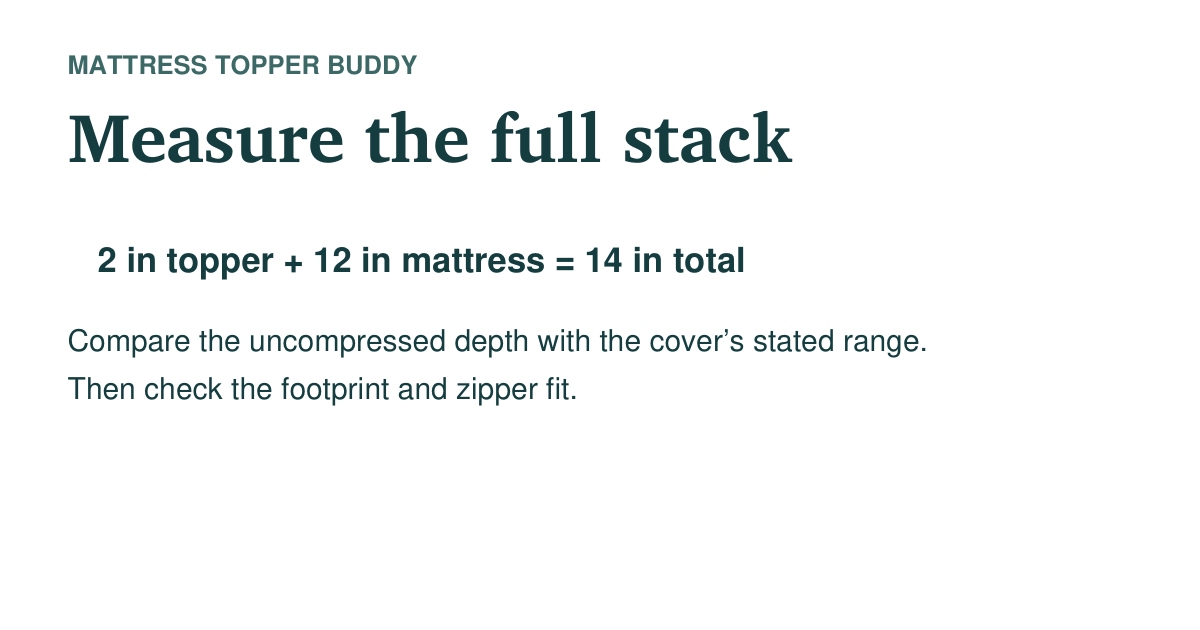
Suppose a queen mattress measures 12 inches deep and an aligned queen topper adds about 2 inches. The assembled height is approximately 14 inches before any additional padded layer goes inside. If the current encasement is rated for a maximum of 12 inches, the new stack exceeds its listed range by about 2 inches. Choose a product whose stated range includes the measured depth and whose instructions expressly allow a topper, or keep the existing cover on the mattress and protect the topper above it.
A range of 11 to 18 inches includes 14 inches, but check the other dimensions before ordering. If the covered item is a specialty queen, a standard queen label can still be the wrong width. Recalculate if you decide to keep a quilted pad inside the zipper as well. A lightly padded piece can change how sharply the corners sit even if the broad center of the setup still appears to fit.
Choose a layer order that fits your routine
| Setup | Layer order from the mattress up | Check before using it |
|---|---|---|
| Shared encasement | Mattress and topper inside the zipper, then fitted sheet | Manufacturer approval, footprint, depth and zipper closure |
| Separate protection | Encased mattress, topper, compatible topper sleeve or fitted protector, then fitted sheet | Which layers the protector covers and whether the sheet fits the complete stack |
For separate protection, decide whether the washable piece should enclose just the topper or wrap over the topper and tuck under the mattress. Measure the insert alone for a topper sleeve. Measure the whole stack for a fitted protector that wraps both layers. A removable fabric sleeve may be convenient for regular cleaning. Check the label for any waterproof or other protective properties you need, including which faces of the product the claim covers.
Close and inspect the zipper before adding the sheet
- Check orientation. Follow the instructions for the waterproof face, zipper starting point and any closure flap. Note where the zipper will rest once the bed is against the wall.
- Center the topper. Make sure the edges lie naturally and the two pieces stay aligned as you pull the cover into position.
- Check each corner. Smooth the fabric so it does not fold into the zipper teeth. Ease the slider along its intended track.
- Look for strain. If the slider stalls or the seam pulls hard across an edge, back up and inspect the fit. Reposition the stack or choose another configuration if it exceeds the stated size.
- Verify the final closure. Check the complete zip path and secure any flap in the position the manufacturer specifies. Then fit the protector or sheet used above it.
Check again after making the bed. If the completed setup looks smooth until you add the fitted sheet, lift the sheet and see whether the topper edge relaxes. This helps separate sheet tension from a problem with the encasement depth. Our topper thickness guide explains how adding a layer changes the depth that bedding needs to fit.
Plan for laundry and future topper changes
Read the drying instructions and consider how often you expect to remove each protective layer. Washing a fitted protector above the topper can be simpler than opening the encasement around the complete stack. If the encasement needs to remain installed for a specific purpose, follow its removal and care directions before planning your wash routine. Keep the instructions for each item handy, because a washable outer layer and a foam insert often require different care.
If you expect to exchange the topper after a comfort trial, check the trial terms before trapping it inside a tight cover or replacing another bedding layer. Try the setup under consistent conditions and record whether the cover changes how the topper moves or feels. Our guide to testing a topper during a sleep trial walks through that comparison. When dimensions or maintenance make the shared setup awkward, separate protection can give you easier access without altering the mattress encasement.
Frequently asked questions
Can a deep-pocket protector replace a zippered encasement?
Compare what the exact products cover. A fitted protector may meet your needs for the sleeping surface, while a zippered encasement surrounds more of the bed. Check the manufacturer’s coverage and installation details for the purpose you have in mind.
Can the topper stay outside if the mattress is already encased?
Yes, when it is compatible with your mattress and its own instructions. The mattress remains inside its encasement and the topper can use separate compatible protection. Measure the full depth for any fitted bedding that wraps both pieces.
Why does the zipper stop at a corner even though the depth looks right?
Check for caught fabric, a shifted topper or a corner shape that stretches the zipper tape. Compare the true width and length as well as the depth. A rounded mattress under a square topper may fill the cover differently from the dimensions shown in a chart.
Do I need to count the mattress foundation?
Leave the foundation out when measuring a cover designed to zip around the mattress or around the mattress and topper. Identify separate products designed for the foundation if you need to cover it as well.
Conclusion
Put the topper inside the zipper when the encasement maker permits the combined setup and the cover closes smoothly within its stated dimensions. Measure the full depth and check the corners before making the bed. Choose separate protection if your topper needs regular removal or the combined stack falls outside the manufacturer’s instructions.