
Choose between a wool and latex mattress topper by deciding whether you want a quilted layer of fibers or a resilient foam layer above your mattress. Wool batting can add a padded surface with a textile feel. Latex foam can add spring and comes in different firmnesses and thicknesses. Compare the finished product, including its cover, before judging either material by the label alone. A topper with wool around a latex core combines both constructions.
Read the product construction first
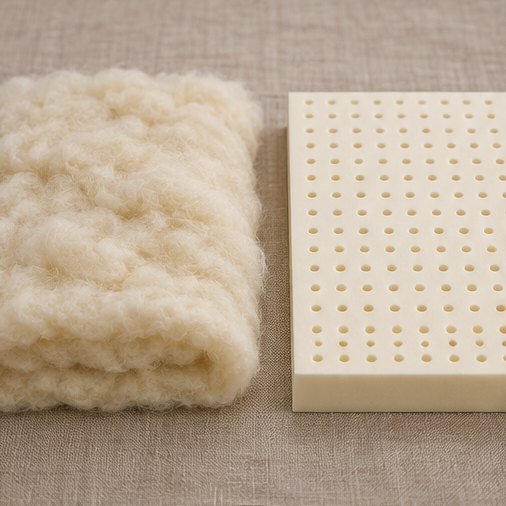
A wool topper commonly holds batting inside a fabric shell. Stitching divides the fill into sections or anchors it through the cover. Check how full those sections are and whether the topper has a removable cover in addition to its permanent shell. A listing may also describe a wool blend, a wool-rich upper panel or a layer of wool over foam. Read what each layer contains and how much of the sleeping surface it covers.
A latex topper can be a molded sheet, with or without a removable sleeve. Holes, a profiled surface and different firmness zones are possible design features. Sleep On Latex’s topper specification provides one example of a molded latex topper sold in multiple thicknesses and firmnesses. Compare the actual options and figures for the product you are considering. A shared material name does not establish equal firmness or finished height.
Compare the feel under the same bedding
Wool batting compresses inside its fabric shell. Examine whether the cover is quilted tightly and how prominent the seams feel through your sheet. A densely stitched layer may feel flatter and less lofty than a generously filled topper. A removable sleeve or thin protector may change what you notice at the surface. Try the bedding setup you will actually use, within any return requirements.
Latex foam generally responds with a more elastic feel. The degree of surface give still depends on the model’s firmness, thickness, cover tension and the mattress beneath. A thin layer on a firm bed may give you a small change, while a deeper or softer layer can produce more noticeable contouring. Check how it feels when you lie down and turn. Pushing a sample with one hand tells you only how a small patch responds to that particular pressure.
If your current bed already has a thick quilted surface, consider how a second padded layer will sit on it. If the surface is level but firmer than you prefer, decide whether your goal is primarily an immediate padded feeling or a more resilient response when you move. Our topper thickness guide explains how additional depth changes the whole setup.
Use thickness and firmness for different questions
Thickness tells you how much space a topper occupies while unloaded. It helps you plan for sheet pockets, frame rails, storage and the floor-to-bed height when you sit on the edge. Firmness tells you how readily the material yields to pressure. Wool fill and latex specifications may use different terms, so avoid using inches of thickness to predict which surface will feel firmer. Compare the finished construction and use a compatible trial if one is available.
Suppose your mattress measures 12 inches tall and your fitted sheet supports a total depth of 14 inches. A two-inch topper brings the nominal stack right up to that limit before a padded protector is included. A quilted topper can have a different height at the seams and in the center of a filled section. Measure both the installed center and the sheet corners after the topper settles as its maker directs. The sheet should hold the stack without pulling the topper corners inward.
Think about warmth and moisture in the whole setup
The top fabric, fitted sheet, protector, duvet and room conditions all affect how warm and humid the bed feels. Wool batting and latex foam have different structures, but two finished toppers can have very different covers and fill arrangements. Check the product description for the textile you will touch indirectly through the sheet and any waterproof construction above it. A ventilated foam core beneath heavily layered bedding can still feel different from the bare sample displayed in a shop.
If temperature is the main reason for buying, keep the duvet, room setup and sheets as consistent as you can while trying the new layer. Note what changed over comparable nights. A topper that felt cooler on a showroom display may be paired with a different mattress and bedding at home. The best comparison is against the setup you already use under the same practical conditions.
Check cleaning and handling before ordering
Read the instructions for the fill, shell and any removable cover. A removable cover may be washable even when the insert requires a different cleaning method. Check how the maker advises drying and whether the cover needs space to lie flat. Compare that with your laundry facilities and where you can actually air bedding. Woolroom’s wool topper buying guide gives model-family care guidance, including restrictions on machine washing. Follow the care label on your exact model.
For a latex topper, ask for the complete weight in the size you are ordering if you expect to lift it often. A flexible wide layer can be awkward to move even if its scale weight seems manageable. Ask how it should be supported and stored. For a fiber topper, consider how the seller recommends maintaining its loft and which parts may be cleaned. Routine handling can matter more than a small difference in initial feel, particularly if the bed doubles as a seat or serves occasional guests.
Two examples of a practical choice
Imagine a guest room with an even mattress that feels comfortable underneath but has a smooth, taut top. The owner wants a lightly padded textile surface and expects little change to the way the mattress responds. A relatively low-profile quilted wool topper is a reasonable option to compare. The owner should verify that its finished height fits the existing sheets and that the care routine works between guests. A thick hybrid with both wool and a foam core would make a larger change to the bed.
In another room, the mattress also lies evenly, but the sleeper wants a layer that yields under load and springs back easily as they turn. They might compare latex models of different firmnesses at similar thickness. Keeping thickness similar makes it easier to evaluate the feel without changing the bed height at the same time. They can then compare a thinner model if the preferred surface makes the bed too tall. The product’s return terms matter if the available showroom setup feels different from the one at home.
Ask what a blended design adds
Some sellers use wool as quilting above a latex core. Ask how much of the finished height comes from the foam and how much comes from the outer batting and shell. A listing that emphasizes the wool may still feel predominantly like the underlying foam once loaded. The quilting may affect the immediate contact feel while the core accounts for much of the rebound. Read the total height and the layer specifications side by side.
Check how the two pieces are assembled. If they are sewn together, the care instructions apply to the assembled unit. If a separate cover is included, confirm what can be removed and washed. Ask whether the exact size and any protector needed to satisfy trial terms are available before ordering. Those details make it possible to compare the complete purchase rather than just the price of the insert.
Inspect how the edges sit after installation
Check whether the wool fill runs right to the perimeter and whether the latex cover pulls against the corners. Put on the sheet you intend to use and compare the surface at the center and along each side. If a corner lifts only when the sheet is in place, check the pocket depth before judging the topper’s construction.
Frequently asked questions
Which topper makes the biggest change to a firm mattress?
Compare specific products by their construction, firmness and thickness. A plush quilted topper and a soft latex slab can give very different sensations. A deeper layer can make a larger change in some designs, but the mattress below also shapes what you feel. Test the actual combination if the seller allows it.
Will either topper fix a deep dip in the mattress?
Inspect the mattress and base separately before choosing a topper. A new comfort layer follows the support it sits on and may leave a persistent dip underneath. Follow the mattress maker’s inspection and support instructions first.
Can I use the same protector with either one?
Measure the complete installed height and match the protector’s approved size range. If the product has a care recommendation about how loose or tight the topper cover should sit, include that when you check the fit. A protector that fits one stack may pull at the corners after you add a deeper layer.
Conclusion
Compare wool for its textile padding and latex for its resilient foam feel. Check the other layers, total height, care instructions and return terms. A product that gives the feel you want and fits your existing bedding routine is the better choice for that bed.